

Why You Have a Full Closet But Nothing to Wear
It’s Not a Shopping Problem
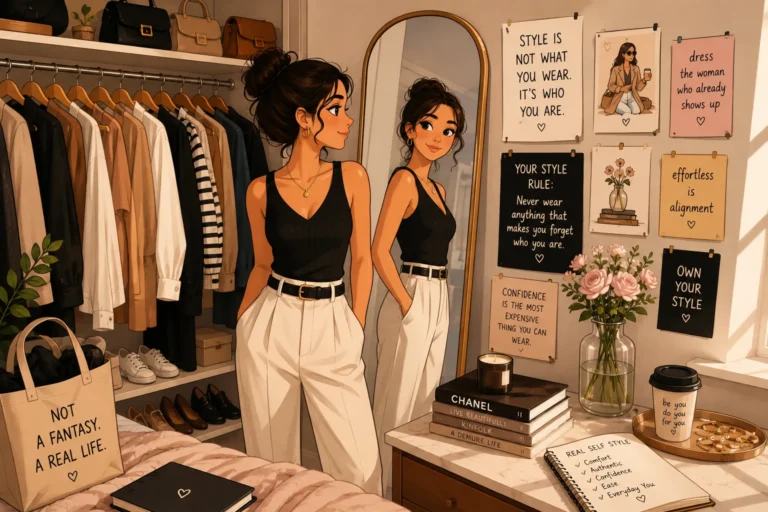
The Root ProblemYou know that feeling. You open your closet, and it’s packed. Jeans, dresses, blouses, blazers, that top you bought on sale three months ago and never touched again. There are options. Technically. But you stand there like you’re staring at a restaurant menu in a language you don’t speak. Everything exists, nothing speaks to you. You end up wearing the same three things on rotation while the rest of your wardrobe watches like an audience you keep disappointing.
This isn’t a storage problem. It’s not a shopping problem either. The real issue runs deeper, and it has everything to do with your personal style identity. When your closet is having an identity crisis, no amount of color matching or trend chasing will fix the way nothing seems to go together.
Your Closet Is Living a Double Life
Here’s what’s actually happening. Your closet isn’t one wardrobe. It’s two wardrobes pretending to be one, and they don’t agree on anything.
On one side, there’s the closet of your fantasy self. She’s the woman who wakes up on a Tuesday and reaches for silk wide-leg pants. She brunches in linen. She wears structured blazers to the grocery store like she’s walking through a Parisian film. You bought those pieces for her. Every time you picked up something that made you think “I could be that woman,” you were dressing a version of you that doesn’t actually exist yet, and maybe was never meant to.
On the other side, there’s the closet of your actual self. She’s the one who needs to be out the door in twelve minutes. She wants soft fabrics, forgiving waistbands, and clothes that don’t require an iron or a confidence pep talk. She’s real. She has a schedule, a body, a climate she lives in, and a life that doesn’t involve cobblestone streets and espresso in sidewalk cafés.
The problem? These two wardrobes are sharing one closet rod, and they are destroying each other’s outfits.
Why Your Personal Style Identity Split Ruins Coordination
Most people think coordination means matching colors or sticking to a palette. That’s surface-level stuff. Real coordination, the kind where you pull out three random items and they just work together, comes from alignment. It comes from every piece in your closet belonging to the same person.
Think of it like a Spotify playlist. When you build a playlist around one vibe, say “Sunday morning, coffee, rain on the window,” every song fits. You can hit shuffle and it works. The whole thing feels like one mood. Now imagine you took that playlist and mixed in heavy metal, a podcast about cryptocurrency, and a children’s nursery rhyme. Same playlist. Same songs that individually are fine. But shuffle it now, and every transition feels wrong. You keep skipping tracks, wondering why nothing sounds good.
That’s your closet. It’s not that the pieces are bad. It’s that they were picked for different people living different lives. Your fantasy self picked the statement earrings. Your actual self picked the cozy cardigan. Put them together, and the outfit feels off. Not because the colors clash, but because the identity clashes.
When your personal style identity is split this way, wardrobe coordination becomes almost impossible. You look at two perfectly nice pieces and think “these don’t go,” but the real translation is “these don’t go because they belong to two different women.” The silk blouse was bought for a woman who lingers. The sneakers were bought for a woman who runs. They’re not a bad pair. They’re just answering different questions.
The Recipe With Missing Ingredients
Here’s another way to see it. Imagine you’re trying to cook a specific recipe, say a warm Moroccan tagine. You need cumin, saffron, preserved lemons, chickpeas. But your kitchen is stocked for someone else’s cooking entirely: soy sauce, rice vinegar, miso paste. Individually, those ingredients are excellent. They make incredible food. But they cannot make a tagine. No matter how much you wish they would.
That’s what getting dressed feels like when your closet doesn’t reflect your real life. You’re trying to cook an outfit from ingredients that belong to someone else’s recipe. You keep looking at the rack thinking “I should be able to make something here,” but you can’t, because the pantry was stocked for a person who doesn’t live in your house.
This is why the common advice falls flat. “Clean out your closet” assumes the problem is volume. It’s not. You could own twelve items and still feel stuck if those twelve items were picked for a life you don’t lead. “Buy neutral colors” assumes the problem is variety. But a closet full of beige picked for your fantasy self is just as useless as a closet full of neon. The issue is never what color the clothes are. It’s whose life they were chosen for.
What Real Coordination Actually Looks Like
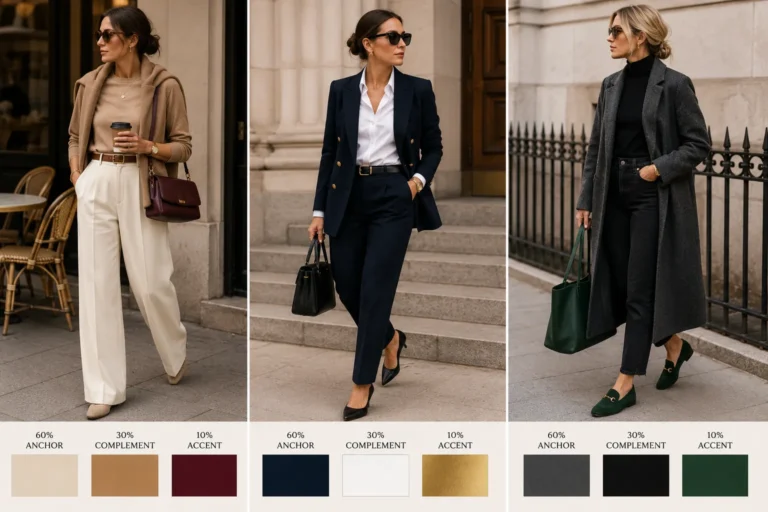
True wardrobe coordination doesn’t start with a color wheel. It starts with honesty. It starts when every piece in your closet was chosen for the woman who actually shows up on a regular Tuesday, not the woman you’re hoping will magically appear.
When your closet is aligned with your real self, coordination happens almost on its own. The pieces naturally belong together because they were all answering the same question: “What does my actual life need me to wear today?” That’s when you open the closet and three random items somehow work. Not because you mastered styling tricks, but because they were never fighting each other in the first place.
The shift isn’t about buying less or buying better. It’s about buying for the right person. The one who exists. The one who has a real schedule, real preferences, real comfort needs, and a real daily routine. When you stop feeding the fantasy self and start dressing the actual self, your closet stops being a battleground and starts being a toolkit.
You stop having outfit frustration not because you own fewer things, but because the things you own finally agree with each other. They agree because they agree on who they’re for.
So Why Do We Keep Dressing the Fantasy?
If the answer is this clear, then why do we keep doing it? Why do smart, self-aware women keep buying clothes for a version of themselves that doesn’t exist? Why is it so painful to admit that we’re not the silk-blouse-on-a-Tuesday woman, and that’s perfectly fine?
The answer to that is the real reason your closet feels broken. And it has nothing to do with clothes.

Founder of MindSpaceGlow — I write about intentional living, mindset & productivity for a calmer life. Not a licensed therapist, but sharing practical, research-based tools that work in real life.
More about me →



4 Comments