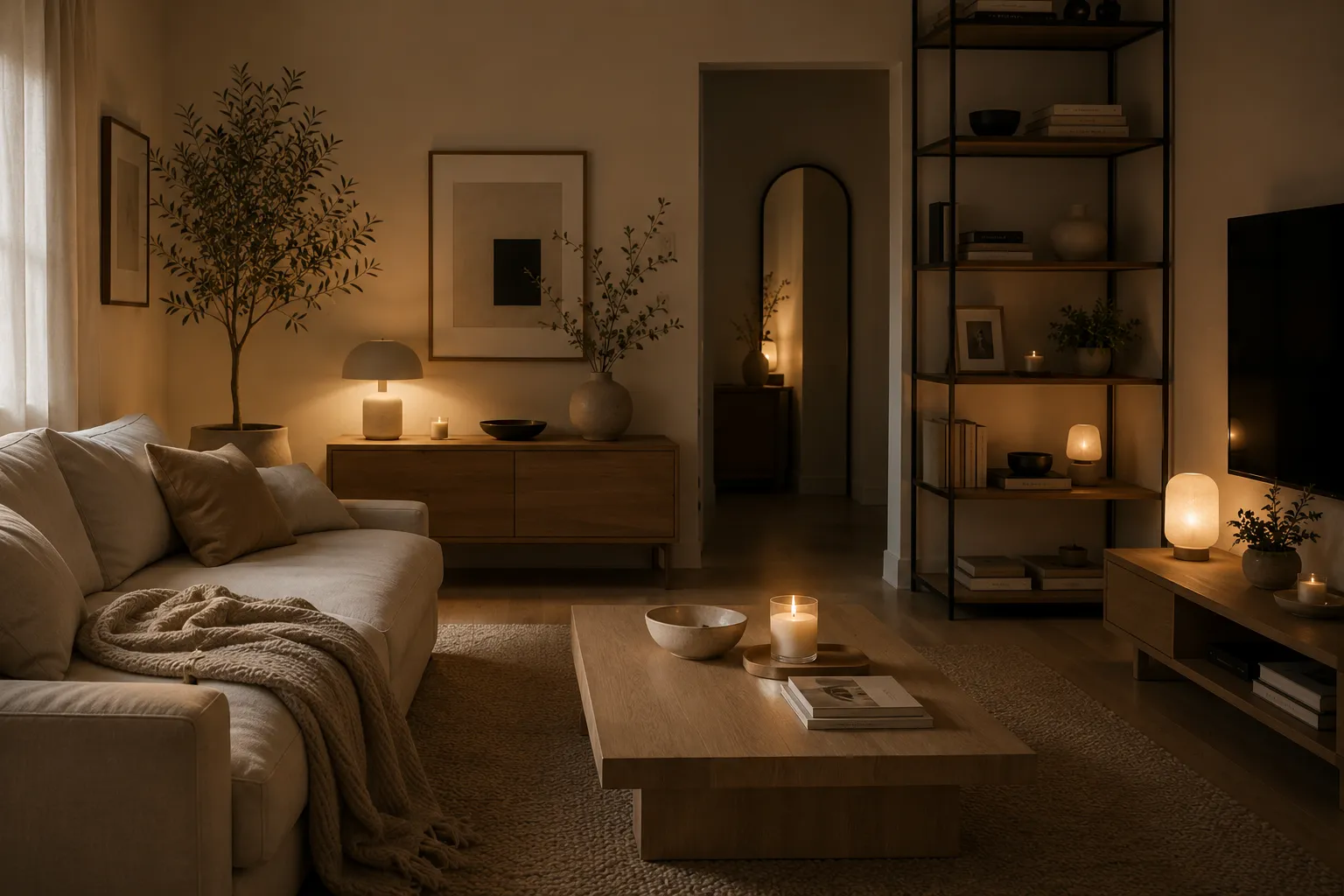
Why Your Room Feels Cluttered (Even After You Just Cleaned It)
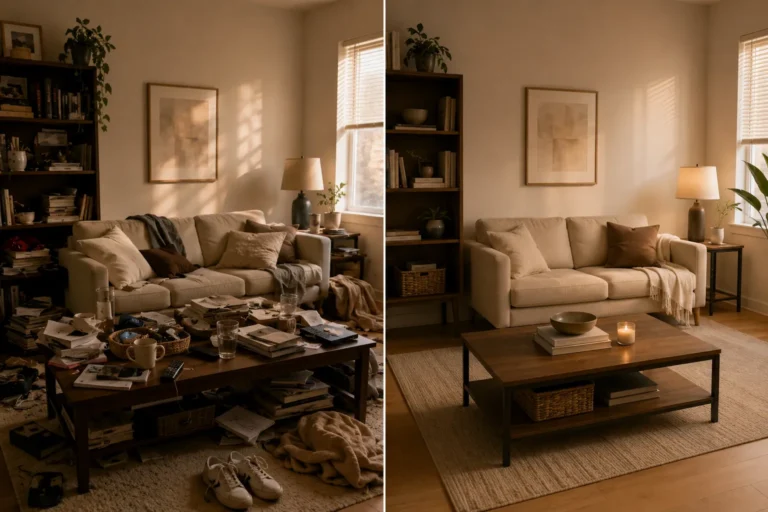
You spent two hours picking up every sock, wiping every surface, and shoving every loose paper into a drawer. You step back to admire your work. And somehow, the room feels cluttered. Not dirty. Not messy. Just loud. Like the walls are whispering at you.
If this has happened to you, you are not lazy, and you are not bad at cleaning. The problem is not the dirt. The problem is something your brain is doing behind your back, and once you see it, you cannot unsee it.
The Hidden Reason Your Room Feels Cluttered
Here is the truth nobody tells you: your brain counts objects. Not literally, of course, but every item in your line of sight sends a tiny signal to your eyes, and your eyes send a tiny signal to your brain. A vase. A remote. A stack of books. A photo frame. A candle. A blanket. Each one is a small ping of attention.
Now imagine your room has 80 visible objects on a normal day. After you clean, you have… still 80 visible objects. You just moved them into neater piles. Your brain does not care that the books are stacked instead of scattered. It still has to process all 80 of them. That is why the room feels cluttered even when it is clean.
Think of it like a room full of people all talking at once. Even if everyone is speaking politely, the room is still loud. Your space is the same way. Cleaning organizes the noise. It does not reduce it.
Why Bigger Furniture Makes It Worse
There is a second hidden culprit, and it is hiding in plain sight: your furniture is too big for what it actually holds.
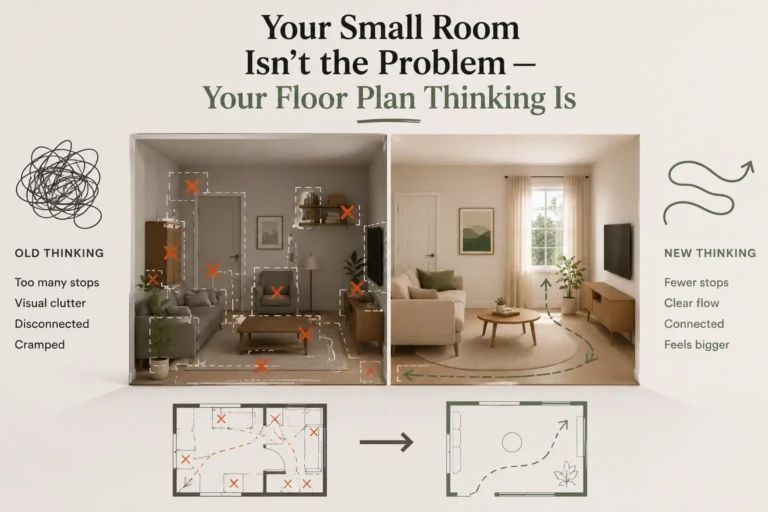
That bulky coffee table? It probably holds a magazine and a cup. That oversized armchair? It sits empty 90 percent of the time. Big furniture eats up floor space, and your eye reads empty floor as breathing room. When the floor shrinks, the room shrinks in your mind, even if the square footage has not changed.
This is why a tiny studio apartment with low, slim furniture can feel airier than a large living room stuffed with sectionals. The room feels cluttered not because of what is in it, but because of how much floor your eye can actually see.
The Color Trick Your Brain Falls For
One more sneaky reason: dark and busy surfaces pull focus. A dark wood bookshelf full of colorful spines is visually heavier than a white wall with one small print. Your eye keeps getting yanked toward the busiest object in the room, and that constant yanking reads as cluttered even when nothing is out of place.
So when you cleaned, you probably left the busy bookshelf exactly where it was. You wiped it. You straightened the books. And your eye is still getting yanked.
How to Fix It Tonight Without Buying Anything
Now that you know the hidden cause, the fix is not “clean harder.” It is “reduce the noise.” Here are five things you can do in under an hour, with stuff you already own.
1. Hide 10 Things You Usually Leave Out
Walk around your room and grab ten items that live in plain sight but do not need to: the remote, the loose change, the three pens, the stack of mail, the charger cable. Put them in a drawer, a basket, or a closed cabinet. You did not get rid of them. You just stopped making your brain process them.
2. Lower the Visual Weight of Your Furniture
You do not need to buy new furniture tonight. Just remove anything sitting on top of your bulky pieces. Clear the coffee table down to one object. Clear the top of the dresser down to two. Let the furniture breathe, and your eye will read the room as lighter instantly.
3. Break Up Busy Surfaces
If you have a dark or colorful bookshelf, pull half the books off and group the rest in small stacks instead of standing them all in a row. Leave empty space on every shelf. Empty space is not wasted space. It is the silence your eye is begging for.
4. Pull Furniture Off the Walls (Yes, Really)
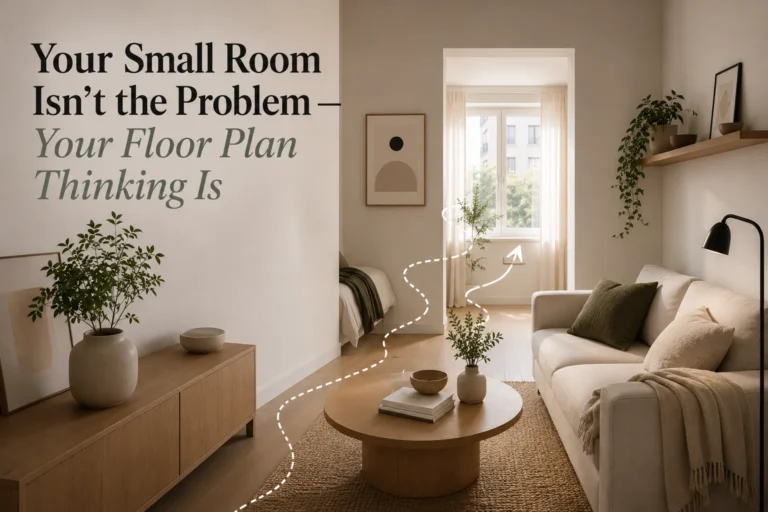
It sounds wrong, but pushing everything against the wall actually makes the room feel smaller. Pull your sofa or bed a few inches forward and let a sliver of floor show behind it. Your eye will read more depth, and the room will feel less packed.
5. Choose One Hero Object per Surface
Every flat surface in your room should have one main object, not five. One lamp on the side table. One vase on the mantel. One stack of three books on the coffee table. Your brain will lock onto the hero and ignore the rest. That is the opposite of object noise.
Why Decluttering Never Worked for You Before
You have probably tried decluttering before. You tossed old papers, donated clothes, and swore you would keep it minimal. Three weeks later, the room felt cluttered again.
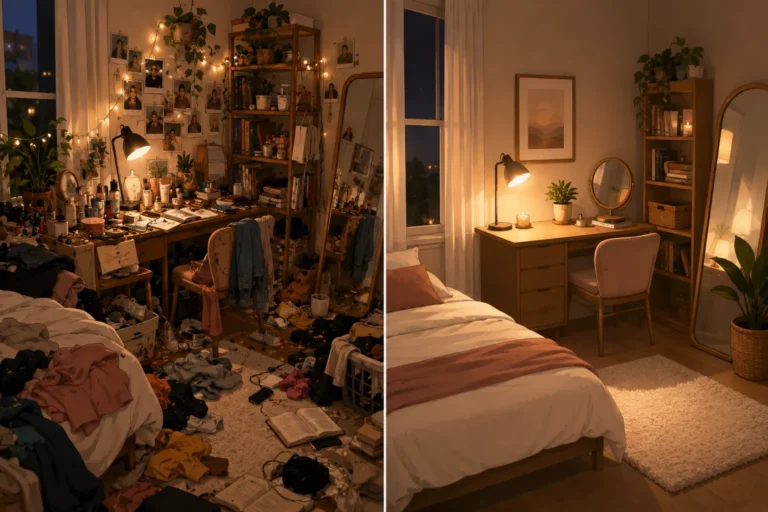
Here is why: decluttering removes items, but it does not change how the remaining items are arranged. If you still have 50 visible objects fighting for attention, your brain is still overwhelmed. The trick is not owning less. The trick is showing less of what you own.
This is the shift that changes everything. You stop fighting your stuff and start curating what your eye can see. The room feels cluttered because you are showing your brain too much at once. Hide the evidence. Let the surfaces breathe. Let the floor show. The clutter disappears, even if the square footage does not.
But There Is One More Thing Bothering You
So you tried the fixes. You hid ten objects, cleared the surfaces, pulled the sofa forward. The room finally feels calm. You sit down with a cup of tea, the sun goes down, and you flip on the ceiling light.
And just like that, the cozy feeling vanishes. The room that looked perfect at 3 PM now feels cold, flat, and a little sad. The walls look grayer. The corners look sharper. You did everything right, so why does your room feel cold the moment the sun drops?
That is not a clutter problem anymore. That is a lighting problem. And the hidden reason your room turns cold at night is something almost nobody talks about, even though it is sitting in every single ceiling in your home.

Founder of MindSpaceGlow — I write about intentional living, mindset & productivity for a calmer life. Not a licensed therapist, but sharing practical, research-based tools that work in real life.
More about me →