
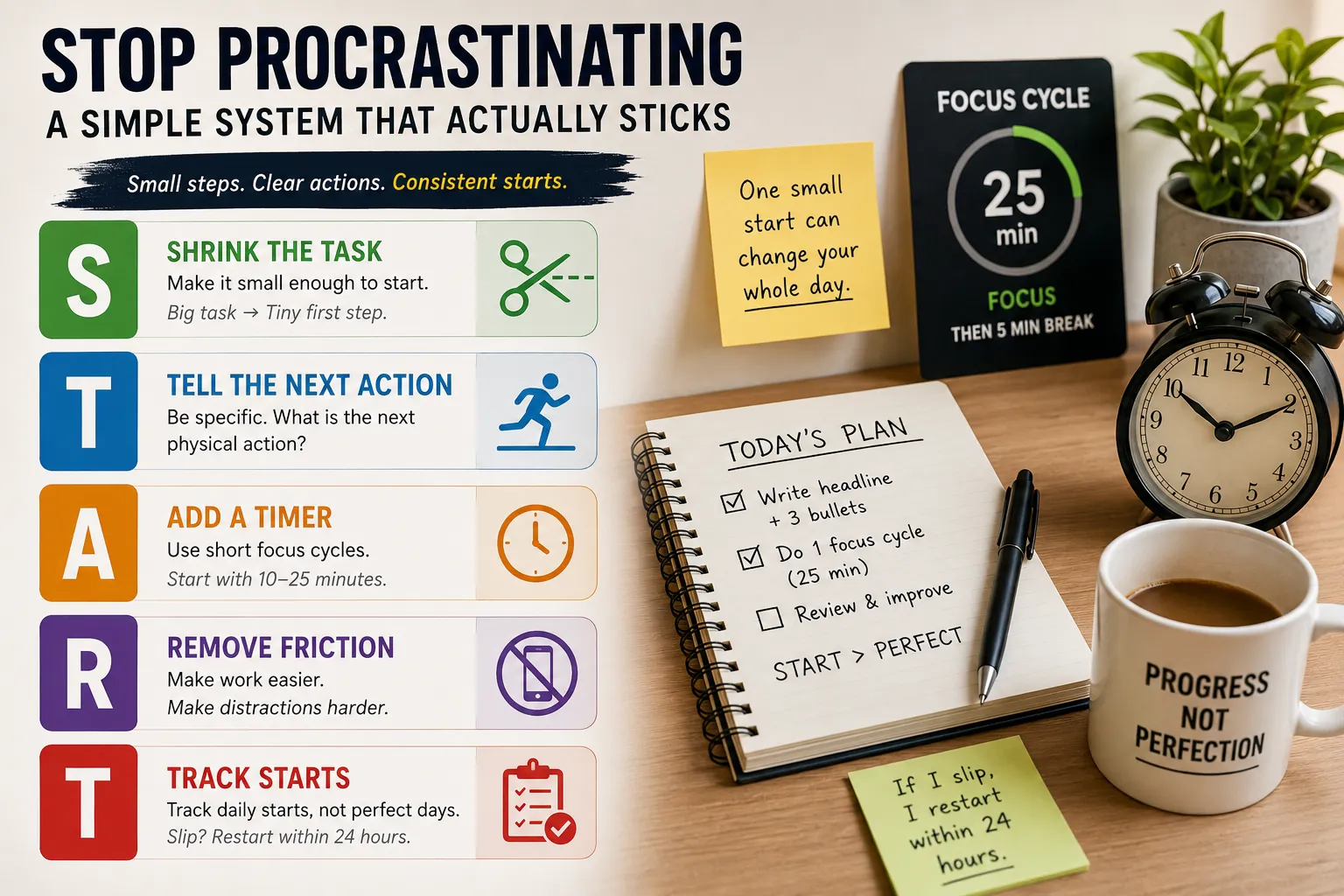
Stop Procrastinating: A Simple System That Actually Sticks
Procrastination Isn’t Laziness—It’s Usually Unclear Work
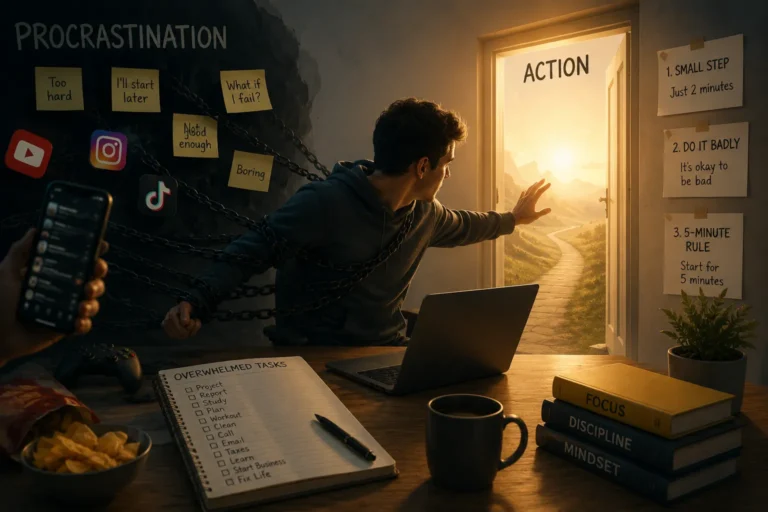
Most procrastination isn’t about being lazy. It’s about facing a task that feels:
- too big (“Where do I even start?”)
- too vague (“What exactly should I do?”)
- too uncomfortable (“What if I mess it up?”)
- too boring (“This is going to take forever.”)
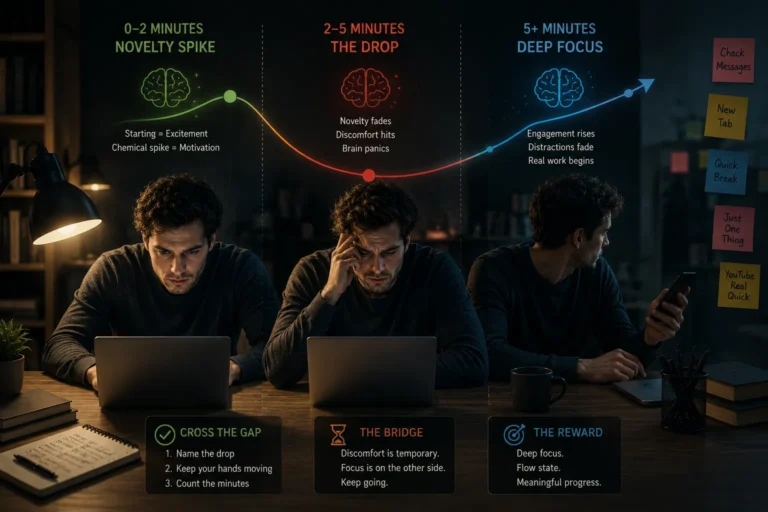
When your brain labels something as unclear or painful, it looks for quick relief—scrolling, snacks, “just one more video,” or busywork.
The solution isn’t more motivation. It’s a system that makes starting easier than avoiding.
The “START” System: 5 Steps to Beat Procrastination
1) S — Shrink the Task (Make It Startable)
A task you can’t start is a task you’ll avoid. Shrink it until it becomes “too small to resist.”
Instead of:
- “Write the blog post”
Do: - “Write the headline + 3 bullet points.”
Instead of:
- “Study for the exam”
Do: - “Open the notes and review page 1 for 10 minutes.”
Instead of:
- “Clean the house”
Do: - “Set a 7-minute timer and clear one surface.”
Rule: If you’re procrastinating, your first step is still too big.
2) T — Tell Yourself the Next Physical Action
Procrastination loves abstract goals. Your brain needs a concrete movement.
Ask: What is the next physical action?
Examples:
- “Open Google Docs and type the title.”
- “Create a folder named ‘Project’ and save the first file.”
- “Put on shoes and walk outside.”
If your “next step” can’t be done in under 2 minutes, it’s not next—break it down again.
3) A — Add a Timer (Short Focus Cycles)
Many people procrastinate because they think the task will eat the whole day. A timer creates a safe container.
Use one of these:
- 10-minute restart (best when you’re stuck)
- 25/5 cycle (classic focus method)
- 45/15 cycle (for deeper work)
Your goal isn’t “finish everything.” Your goal is: start and stay for one cycle.
Once you’re moving, resistance usually drops.
4) R — Remove Friction (Design Your Environment)
Willpower is unreliable. Environment is predictable.
Make work easier:
- Put everything you need in one place (tabs, doc, notes, tools)
- Keep your desk clear (one task visible)
- Use a “work-only” browser profile
- Prepare a checklist for the first 5 minutes of work
Make distractions harder:
- Put your phone in another room
- Log out of social apps
- Block top distracting sites for 60–90 minutes
- Keep entertainment apps off your home screen
A small change in friction can create a big change in behavior.
5) T — Track Starts (And Recover Fast)
People quit because they think: “I failed again.” But procrastination is a pattern—you need feedback, not self-hate.
Track daily starts, not perfect days:
- Did I complete one focus cycle today? (Yes/No)
- What did I avoid, and why?
- What helped me start?
Also use a recovery rule:
If I slip, I restart within 24 hours.
No drama. No punishment. Just reset.
A Simple Daily Routine That Prevents Procrastination (5 Minutes)
Use this structure every morning or before work:
Step 1: Pick ONE “Must-Do” Task
Not ten. One. If finished, the day feels meaningful.
Step 2: Define the Next Physical Action
Write a sentence like:
- “Open the draft and write the first 150 words.”
Step 3: Start One Timer
Do one cycle. After that, you’re allowed to stop—but most of the time you won’t want to.
Step 4: Reward the Start
Your brain learns through rewards. After the cycle:
- short walk
- coffee refill
- quick stretch
- 5 minutes of something enjoyable
Rewarding the start trains consistency.
Why This Works (In Simple Terms)
This system works because it:
- reduces fear by shrinking the task
- removes uncertainty by defining the next action
- reduces overwhelm by using time limits
- reduces temptation by changing your environment
- builds confidence through tracking and recovery
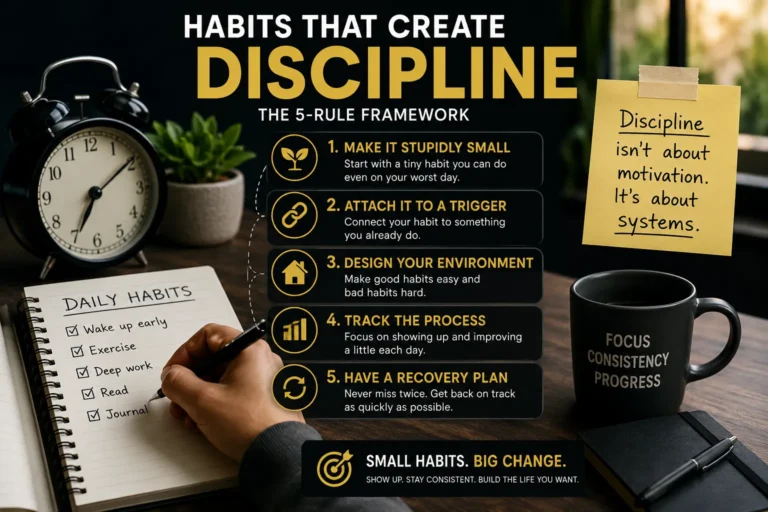
Discipline isn’t becoming a new person overnight. It’s building a process you can repeat.
Common Reasons You Still Procrastinate (And Quick Fixes)
1) You’re trying to be perfect
Fix: Write an “ugly first draft.” Improve later.
2) You don’t know what “done” looks like
Fix: Define a finish line: “Write 600 words,” “Solve 10 problems,” “Send the email.”
3) You’re mentally exhausted
Fix: Do a 10-minute cycle only. Momentum > intensity.
4) You’re doing everything alone
Fix: Add accountability: coworking session, friend check-in, or a public commitment.
FAQ
How do I stop procrastinating when I’m not motivated?
Use the minimum step + one timer. Motivation often appears after you start.
What if the task is genuinely hard or scary?
Break it into a “confidence ladder”: the easiest 5-minute step first. Fear shrinks when you create evidence that you can act.
How many tasks should I focus on per day?
One must-do task + 1–2 smaller tasks is realistic for most people. Too many priorities creates avoidance.
Final Takeaway
If you want something that actually sticks, remember START:
- Shrink the task
- Tell the next physical action
- Add a timer
- Remove friction
- Track starts and recover fast

Founder of MindSpaceGlow — I write about intentional living, mindset & productivity for a calmer life. Not a licensed therapist, but sharing practical, research-based tools that work in real life.
More about me →


2 Comments