Why Your Room Feels Cluttered (And How to Fix It Tonight)
Your room feels cluttered even after cleaning, and it is not your fault. Discover the hidden reason your brain counts objects, and the simple trick to fix it tonight.
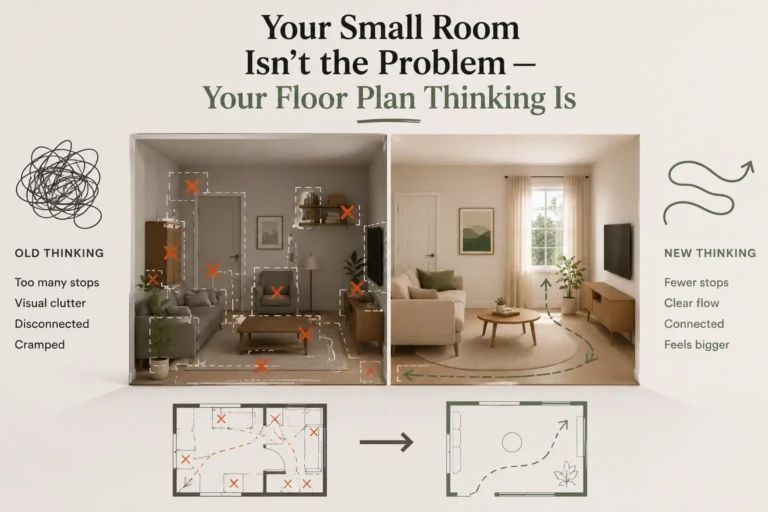
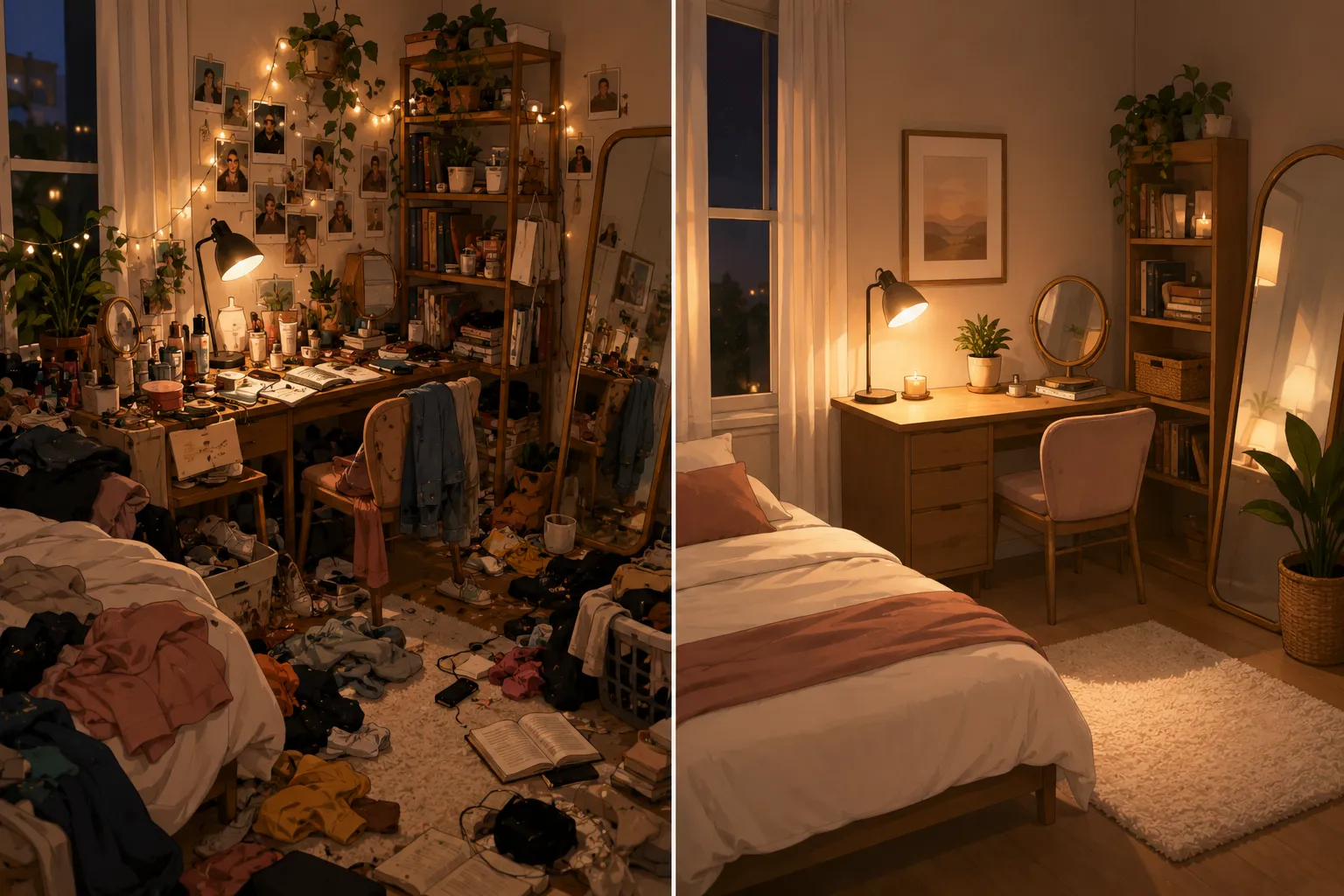
You just spent two hours cleaning. You wiped every surface, folded every blanket, and shoved every loose item into a drawer. You step back, ready to feel that satisfying sigh of relief. But instead, your room feels cluttered all over again. The counters look clean, the floor is clear, yet something invisible is still pressing on you. If this sounds familiar, you are not messy, lazy, or bad at organizing. You are fighting a hidden battle with your own brain, and it is one that no amount of tidying can win.
Your Brain Is Counting Objects, Not Square Footage
Here is the thing nobody tells you about why your room feels cluttered: your brain does not measure space in square feet. It measures space in how many separate things it has to look at. Every single object in your field of vision, whether it is a lamp, a photo frame, a patterned pillow, or a stack of books, sends a tiny signal to your brain saying “notice me.” Your brain processes each one individually, like a checklist it cannot stop reading. When the checklist gets too long, your brain hits overload. That overloaded feeling is what you call clutter.
Think of it like walking into a crowded restaurant. Even if every table is perfectly arranged and spotless, the sheer number of chairs, plates, glasses, and people makes the room feel packed. Now imagine the same restaurant with half the tables removed. Same walls, same floor, same lighting, but suddenly it feels spacious. Nothing changed about the room itself. What changed was how many things your brain had to count.
Why Organizing Does Not Fix the Problem
Most decluttering advice tells you to group items into neat categories. Put your books together. Line up your jars. Sort your cords into labeled boxes. But here is the trap: organizing does not reduce the number of objects your brain has to process. It just rearranges them into tidier piles. Your brain still sees twelve jars on the counter instead of one “group of jars.” It still sees seven books on the shelf instead of one “book collection.” The visual count stays the same, so that cramped, cluttered feeling never leaves.
This is why you can spend an entire weekend reorganizing your kitchen or your closet and still feel like something is off by Monday morning. You moved the clutter around. You did not remove the visual weight. It is like repacking a suitcase that is already too heavy. The clothes are neater, but you still cannot lift it.
The Real Culprit: Visual Density
The hidden reason your room feels cluttered comes down to something I call visual density. This is the number of separate shapes, colors, and textures your eyes have to process in any single glance. A blank wall has low visual density. A wall with a clock, three photos, a shelf of figurines, and a patterned wallpaper border has extremely high visual density. Your brain reads every shape as a separate item. Every color shift is another item. Every texture change is another item. The busier the surface, the heavier the room feels.
This explains why a room with very few but very busy objects can feel more cluttered than a room with many simple ones. A single multi-patterned throw blanket draped over a chair adds more visual density than three solid-color pillows stacked neatly. A colorful, busy rug makes a floor feel full, while a plain rug in the same size makes the same floor feel open. Your brain is not counting square footage or storage capacity. It is counting visual events.
Surface Zero: The Fix That Actually Works
Instead of organizing, you need to reduce the number of things your brain has to count. The fastest way to do that tonight is a method I call Surface Zero. Pick one surface in your room, your nightstand, your kitchen counter, or your coffee table, and remove everything from it. Not almost everything. Everything. Wipe it completely clean. Now put back only three items maximum, and make sure at least two of them are the same color or material. A white lamp on a white book next to a small plant. That is it.
What you just did was slash the visual density on that surface by eighty percent. Your brain now sees three objects instead of twelve. It can relax. That surface now feels calm instead of chaotic, and it took you less than ten minutes. You did not buy anything. You did not build anything. You simply gave your brain fewer things to count.
The Color Consolidation Trick
Here is a second trick that multiplies the effect. Walk through your room and count how many different colors are visible at eye level. Not hidden in drawers, but sitting out where your eyes land. If you count more than four distinct colors, your brain is processing each one as a separate object. A red vase, a blue binder, a yellow candle, a green plant, and a purple photo frame means your brain is already at five before it even looks at furniture.
The fix: gather your visible objects into two or three color families. Warm tones together, cool tones together, neutrals as your base. Group the red vase next to the yellow candle on a neutral tray. Move the blue binder into a drawer or behind a closed door. Suddenly, your brain processes the warm group as one visual event instead of two separate ones. The room feels calmer without you removing a single item.
The Pattern Audit
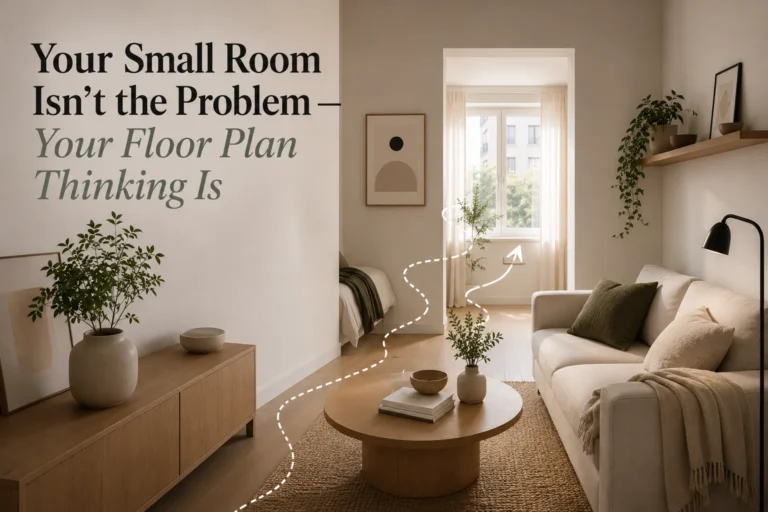
One last step for tonight. Stand in your doorway and scan for patterns. Stripes on the curtains, florals on the couch, geometric prints on the rug, polka dots on the pillows. Each pattern is a swarm of visual events for your brain. Three different patterns in one view can add up to dozens of extra “objects” your brain feels forced to count. Remove or replace just one patterned item with a solid-colored alternative. The difference will be immediate. Your eyes will have a place to rest, and the room will feel instantly more spacious.
The Question You Are Not Asking Yet
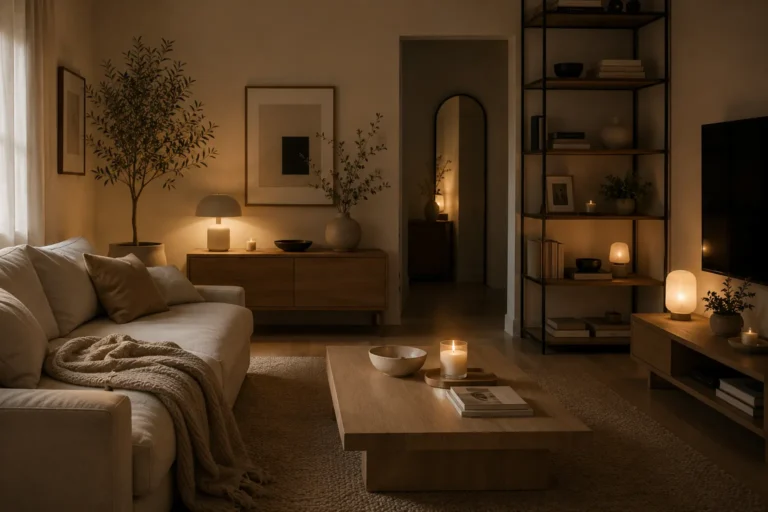
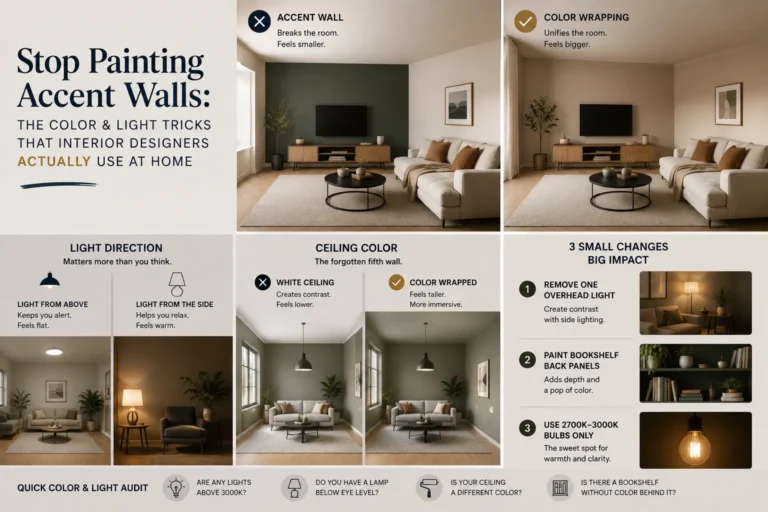
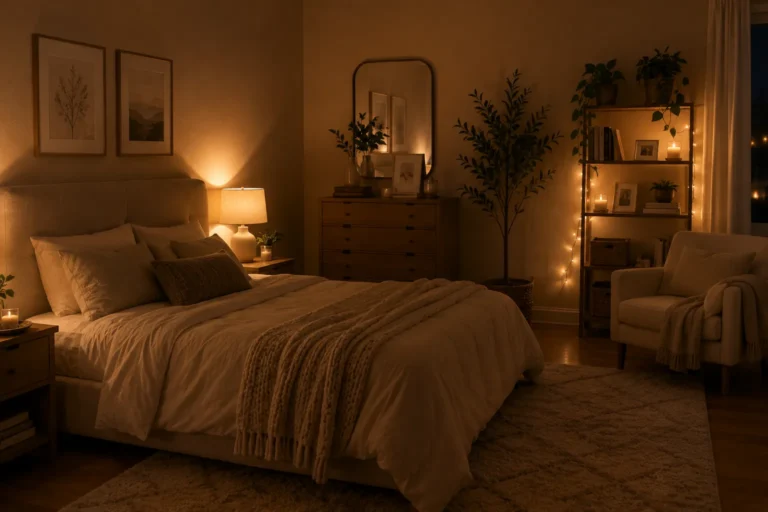
You cleared the surfaces. You consolidated the colors. You tamed the patterns. Your room finally looks clean, and for the first time in months, your brain can breathe when you walk in. But then the sun goes down, and something shifts. The same room that felt so calm at noon now feels cold, flat, and somehow incomplete. The clutter is gone, but the comfort is missing. Why does a room that looks perfect in daylight feel so wrong at night? The answer has nothing to do with objects or patterns. It has everything to do with something you are probably ignoring right now: your lighting.

Founder of MindSpaceGlow — I write about intentional living, mindset & productivity for a calmer life. Not a licensed therapist, but sharing practical, research-based tools that work in real life.
More about me →